
Reviewed · GRAN CANARIA ISLAND TOURS
Full-Day Tour Exploring History, Nature and Aloe Vera Farm
Gran Canaria is the kind of island that rewards variety. This 7-hour day pulls you from volcanic viewpoints to aboriginal cave history, then wraps it up with an aloe vera farm stop. I like the way the route mixes nature and Canarian town life without turning it into a sprint of random photo stops, and I also like that you get hotel-area pickup from the south.
My favorite part is the guided pacing. People highlight guides such as Tom, Simone, Miguel, and Maribel for keeping the day organized and talkative in the languages they offer. The trade-off is real, though: it is a long day, and you spend a lot of time on the coach, so some stops are quick compared with what you might hope for.
Key highlights worth your attention
- Guayadeque Valley, Natural Monument since 2000, with cave dwellings tied to the first pre-Hispanic inhabitants (some still in use).
- Roque Nublo volcanic crag, about 80 meters above its base, with significance for aboriginal worship and protected-area status.
- A day that covers north and central Gran Canaria, giving you a fast “map in your head” for future independent exploring.
- Teror’s Basilica of Nuestra Sra, del Pino, a major Canarian religious anchor plus traditional houses around it.
- Valleseco’s protected-natural-area vibe, with a lot of greenery and time for a walk and lunch on your own.
- Aloe vera farm visit in Fataga, built around the plant’s uses and properties, with time to see how it is presented to visitors.
Why This Route Feels Like a Best-Of Gran Canaria Day
This is the sort of tour I recommend when you want to understand Gran Canaria fast. You are not just doing scenic pulls. You are getting a guided story line: aboriginal roots, volcanic geography, and how inland towns work day to day.
I also like that the itinerary is structured like a loop of changing scenery. You start with an ancient settlement and a valley shaped for hiking and viewpoints. Then you swing into historic towns like Agüimes and Teror. After that, you hit mountain and crag country, and the day ends with a farm stop tied to the island’s modern agricultural story.
The price, $59.61 per person, looks fair when you factor in what is included: a guide, transfers, an aloe farm visit, and insurance. Lunch is not included, and that matters. But for a full day that covers multiple regions, it is not the kind of tour that feels overpriced once you are on it.
More full-island tours to compare:
- From Mogán/Maspalomas/Arguineguín: Gran Canaria Day Tour
★ 4.2 · 1,729 reviews - Las Palmas: 8-Hour Gran Canaria Island Highlights Tour
★ 4.9 · 996 reviews - From Las Palmas: Highlights of Gran Canaria Day Tour
★ 4.6 · 566 reviews
Pickup in the South, Then a Full Day on the Clock
Your day starts at 9:00 am. Pickup operates only from hotels in southern Gran Canaria, and the transfer window runs roughly between 09:00 and 10:30. You are picked up at your hotel or at the nearest pickup point.
Why this matters for you: it cuts down on driving stress. If you are staying in a more tourist-focused area and you do not want to rent a car, this is the easy button. It also means the day starts in a practical way, with less time wasted finding meeting points.
The only real caution is time management. This is a long day, and a good chunk of it is the coach ride between mountain stops. One review even pointed out that about 70 percent of the day is on the coach. That can be totally worth it if you want to sit back and watch the interior change. It can feel rushed if you expect long, slow wandering at each town.
Packing tip: plan for movement. Even when a stop has only an hour, you still want comfortable shoes for uneven streets and short walks.
Stop 1: Agüimes Casco Histórico and the Guayadeque Cave Story
Your first stop blends two layers of place. You visit the Casco Histórico de Agüimes, and then you head to Guayadeque Valley.
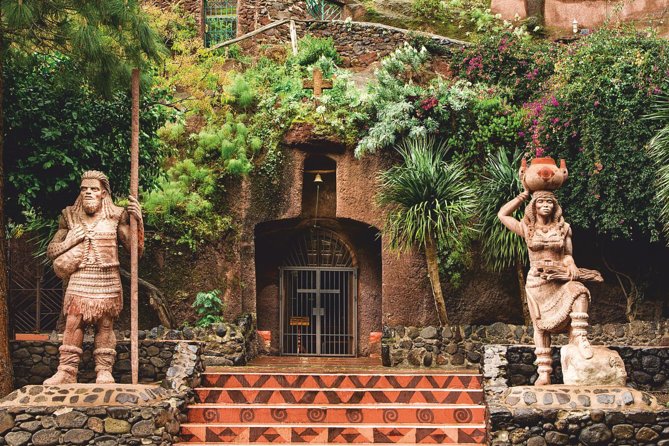
Agüimes is described as an ancient aboriginal settlement. That is the phrase that matters. It is not just a cute village stop. You are in a location with deep roots, where the area’s original settlement patterns still shape what you see.
Then comes Guayadeque, and this is one of the most distinctive parts of the day. The valley is listed as a Natural Monument since 2000. It is famous for hiking trails and sweeping views. But what makes it special is the aboriginal soul of the place: cave dwellings from the first pre-Hispanic inhabitants, with some still in use today.
How to enjoy this stop: do not rush the viewpoints. Even if you only have about an hour, try to take a moment before you move on. The valley reads differently after you understand it is both a natural space and a living historical one.
Watchouts: caves and older areas can mean steps or uneven ground. If you have mobility concerns, this is where you should be honest with yourself and move carefully.
Stop 2: Arucas for Rum and Bananas
Arucas is short and sweet on the schedule, around an hour. It is known for local rum and banana cultivation.
This is not where you go for a monument. It is more of a “get a feel for island agriculture and local products” stop. If you are the type who likes to taste and see how everyday industries work, this one fits your style.
If you want a deeper story: ask your guide a question when you are there. In a day like this, the guide’s commentary is what turns a quick stop into something you remember.
A few more Gran Canaria days worth comparing
- Gran Canaria Historic Tour – Yestarday and Today Premium
★ 4.0 · 10 reviews - Gran Canaria historical house with mango plantation
★ 5.0 · 7 reviews
Stop 3: Teror, Basilica of Nuestra Sra del Pino, and Classic Canarian Houses
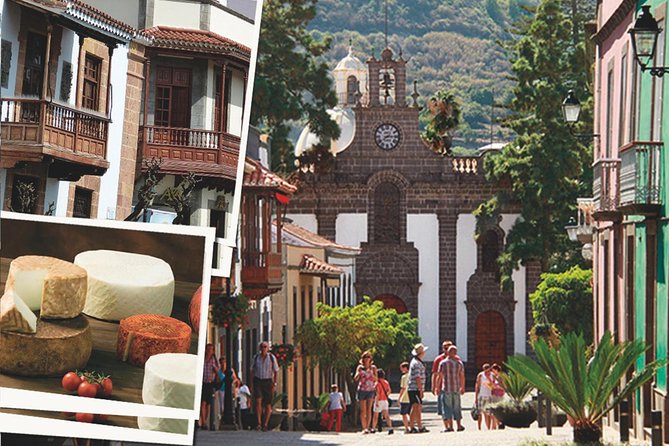
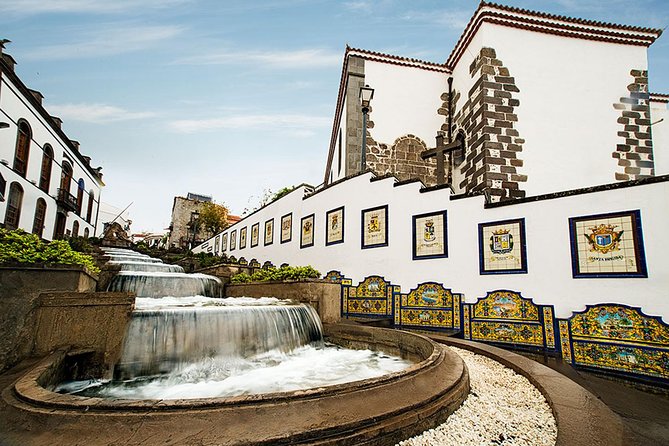
Teror is a highlight for many people because it gives you both religious center energy and historic architectural texture. You spend about an hour here.
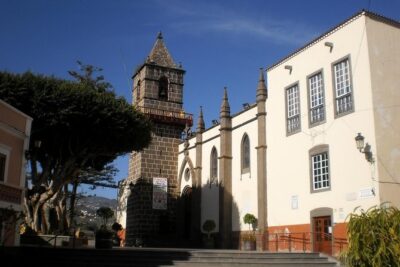
You will find the Basilica of Nuestra Sra, del Pino, which is identified as the patron saint of the Canary Islands deanery. Around it are stately homes and palaces built in a Canarian style.
I like Teror because it helps you understand the island beyond the viewpoints. You are seeing where locals gather, shop, and carry on traditions. Even if you do not go inside, you get the sense of a town with a real identity.
How to use your time: if you like photos, focus on streets and facades first, then decide whether you want to linger near the basilica area. With only an hour, you want a plan so you do not get pulled into slow decisions.
Stop 4: Valleseco, a Protected Natural Area and the Lunch Window
Valleseco is characterized by overflowing vegetation, and the itinerary notes that about 80 percent of its territory is considered a Protected Natural Area. You also get time for a walk through the streets and time for lunch.
A key detail: lunch is not included in the tour price. The schedule explicitly gives you free time for lunch, and you will pay on your own.
Here is how I think about this stop value. Valleseco works as a reset point. After historic towns, you feel the greenery and the inland air. Then you can decide how you want to handle the meal: quick bite, longer sit, or pack your own if that is your style.
Practical advice: because lunch is not built into the price, go with a realistic expectation. Build a small buffer in your budget for food and drinks. It is part of how the day stays affordable.
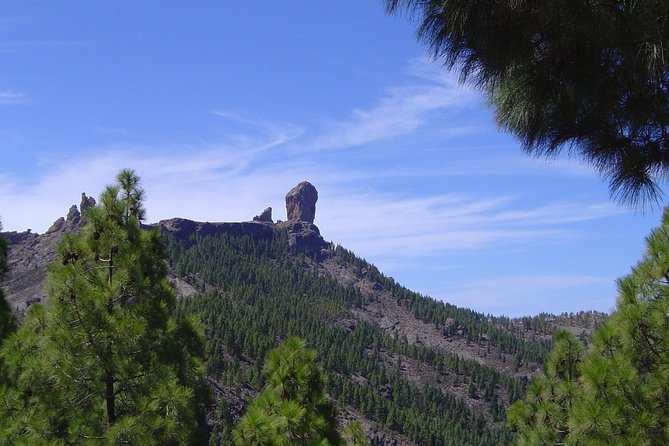
Stop 5: Roque Nublo, an 80-Meter Volcanic Crag and an Aborigine Worship Site
Roque Nublo is the big volcanic moment. The stop is about an hour, and it is listed as one of the largest natural crags in the world.
You are told it rises 80 meters above its base, and it has special significance for islanders. The area is described as an ancient place of worship for aborigines. It is also protected: the whole area around it was declared a protected natural area in 1987, and later it became a rural park seven years later.
Why this matters for you: the crag is not just a pretty rock. It is a physical landmark with cultural meaning and legal protection. That is a powerful combo in a short stop, especially when you have a guide explaining the story behind the view.
How to enjoy it in limited time:
- Look for the framing points from the road area first.
- Then spend your second pass deciding where you want your photos from.
- If the wind picks up, keep an eye on jackets. Higher ground can feel cooler.
One more thing: because this is a volcanic area with protection status, it is also the kind of place where you should respect boundaries and follow local guidance. Your comfort and safety come first.
Stop 6: Fataga and the Aloe Vera Farm Visit (Plus the Sales Angle Reality)
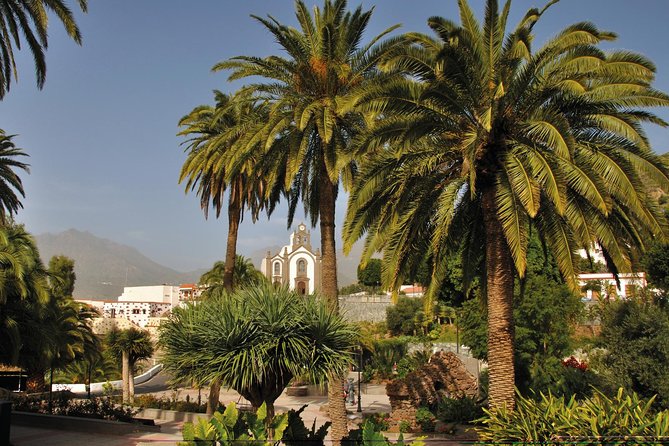
The final content stop is the aloe vera farm in Fataga. Fataga is described as the Valley of the Thousand Palm Trees, though the schedule says you will not stop there as part of the aloe segment. Your focus shifts to the farm.
Aloe vera is called the miracle plant, and the itinerary notes more and more people in the Canaries are betting on cultivation and commercialization. On the farm, you learn about the uses and properties of aloe vera.
This is where I give you a balanced warning. Aloe farm stops are often a mix of education and product presentation. Some people love the information. Others feel it turns too much into a storefront style experience.
If your goal is hands-on learning about processing and production, go in with eyes open. If your goal is to see how the island markets its aloe story and understand what the plant is used for, this stop can work well.
How to make it better for yourself:
- Stay curious, but keep track of time. You are on a scheduled day.
- Ask what is practical, like how aloe is used and what products people actually make.
- If you are not into shopping, treat the farm portion as the learning moment and then move along when you are done.
The Coach Ride: Views, Motion, and Why the Driver Matters
This tour is built for visibility. The route moves through interior roads where you want a driver who handles bends confidently. Reviews repeatedly praise drivers such as Manolo, Alfredo, and others for navigating challenging roads through the mountains.
That praise is not just ego. It is what keeps the day pleasant. On a long day, comfort is everything. When the drive is steady, you can actually enjoy the scenery instead of gripping your seat the whole way.
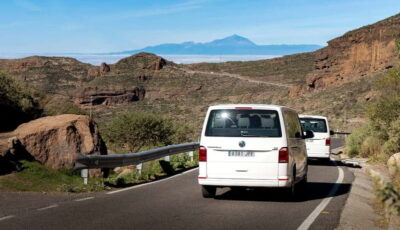
Also, the vehicle type matters. One review pointed out that the tour looked like it would be a minibus, but it was a coach, which can limit views a bit. So if you are window-spot picky, sit strategically when you board. If you can choose, pick the side that gives you the best sightlines for the next leg, and bring a strap for your phone or camera so it does not get tossed around in braking.
How Much Time You Really Get at Each Stop
Here is the honest reality of a 7-hour loop with multiple regions. Even with good organization, you will not have hours in every town.
You typically get about an hour for:
- Guayadeque and Agüimes core historic area
- Arucas
- Teror
- Roque Nublo
- The aloe farm visit
Then Valleseco gets more breathing room at about two hours, including walking time and lunch opportunity.
I like this structure for first-time island orientation. You leave with a clear mental map of where things are, and you learn which areas you want to return to on your own. If you want slow travel, you might feel the time crunch. If you want an efficient, guided overview, it is a solid match.
One more note: a few reviews mention quick stops that feel like photo-and-go. That does not mean the locations are bad. It means you should decide early what you want most from your day, photos or deeper stops, and adjust your expectations.
Value Check: Is $59.61 a Smart Deal for Your Day?
For the price, you get:
- A local guide for the full experience
- Transfers with pickup and drop-off in southern Gran Canaria
- Aloe vera farm visit
- Insurance
- Mobile ticket use
What you do not get:
- Lunch (you need to plan and pay)
If you compare it to the cost of renting a car, paying for fuel, and then paying for attractions, the bundled transfers and guidance can feel like a bargain. You also avoid the hassle of figuring out inland roads and parking, especially if you are not used to driving there.
Where value can drop: if you end up wanting more time in fewer places, a tour like this can feel like you are paying for motion more than for lingering. The aloe stop is also a potential mismatch if you want pure science instead of a marketing-forward farm visit.
My take: this tour is a good deal if you want variety and guidance in one day. It is not a good deal if you want a relaxed, slow-paced itinerary.
Who This Tour Fits Best
This works best for:
- First-time visitors who want north and central Gran Canaria in one day
- People staying in southern areas who want pickup and drop-off
- Anyone who likes mixing old villages with real natural landmarks, caves, and volcanic sights
It may not fit as well for:
- Folks who get annoyed when stops are short
- People who dislike storefront-style stops and want only site visits
- Travelers who hate long coach time
Should You Book This Gran Canaria History, Nature, and Aloe Vera Tour?
If your goal is to get your bearings fast, yes, book it. The itinerary hits major cultural and natural anchors, including Guayadeque, Teror, Roque Nublo, and an aloe vera farm in Fataga. You also get real help from a guide, and reviews specifically call out guides like Tom, Simone, Miguel, and Maribel for making the day work.
But if you are the type who plans your vacation around long walks and lingering conversations, you should adjust expectations. This is a packed day. You get variety, not deep time.
FAQ
FAQ
How long is the full-day tour?
The tour duration is listed as about 7 hours.
Where does the tour take place?
It is in Gran Canaria, Spain.
What is included in the price?
The tour includes a guide, transfer services, an aloe vera farm visit, and insurance. Lunch is not included.
Do I get pickup and drop-off?
Yes. Pickup is offered from hotels in the south of Gran Canaria, with drop-off back in the same area.
What time does the tour start?
The start time is 9:00 am.
Is there a mobile ticket?
Yes, the tour includes a mobile ticket.
How large is the group?
The maximum group size is listed as 40 travelers.
Is lunch included?
No. Lunch is not included in the tour.
Is the tour weather-dependent?
Yes. The experience requires good weather. If it is canceled due to poor weather, you will be offered a different date or a full refund.
What is the cancellation policy?
You can cancel for a full refund up to 24 hours in advance of the experience’s start time.
What if the minimum number of travelers is not met?
If the minimum number is not met and the tour is canceled, you will be offered a different date or a full refund.
More Farms in Gran Canaria
- Tour to Arucas, Teror, Aloe Vera farm – Highlights
★ 4.5 · 9 reviews
Recently reviewed around Gran Canaria
- Traditional Gran Canaria: Arucas, Firgas and Teror★ 5.0 · 4 reviews
- Water Activities Combo in Gran Canaria★ 4.0 · 5 reviews
- YIN Yoga – deep stretch and relax★ 5.0 · 7 reviews
- Your photo shoot in Gran Canaria★ 5.0 · 4 reviews
- Gran Canaria Historic Tour – Yestarday and Today Premium★ 4.0 · 10 reviews
- Wanderungen im grünen Gran Canaria★ 5.0 · 3 reviews
- E-Bike CitySightseeing: Maspalomas Dunes, Playa Ingles, Meloneras★ 5.0 · 10 reviews
- e-Scooter City Tour + Camel Ride inside Maspalomas Dunes★ 4.5 · 11 reviews
Gran Canaria Island Tours, compared.
Full Day Across the Island Tour from Las Palmas
Read our review →
Gran Canaria 7 Highlights Small Group Tour with Tapas Picnic
Read our review →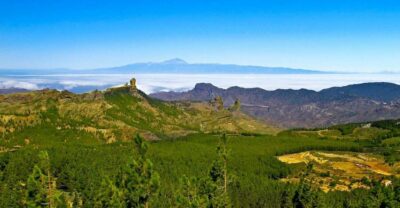
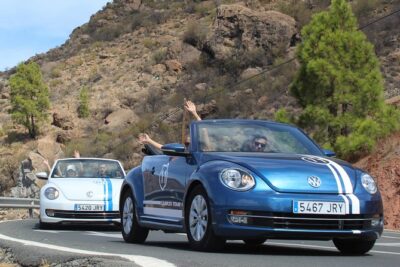
Vw Beetle Convertible Island tour Discover the island on a different way
Read our review →Browse the lists this tour appears in