
Reviewed · SCUBA DIVING
PADI Rescue Diver Course in Gran Canaria
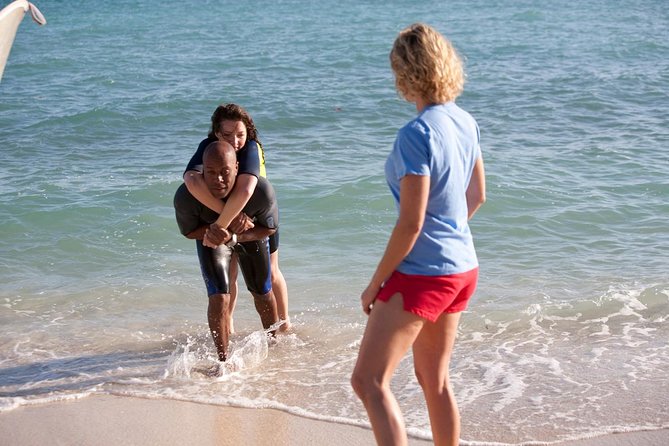
This PADI Rescue Diver Course is interesting because it focuses on the moment that matters most underwater, handling a struggling, unresponsive, or unconscious diver and practicing self-rescue when you need it fast. The setting helps too, with Amadores Beach on Gran Canaria’s west coast giving you a real, practical place to learn.
Two things I really like about this course are the expert coaching from instructors such as Chris and the smooth logistics led by Kate, plus the hands-on structure that blends classroom learning with practical scenarios over two days. One consideration: you do need to arrive already PADI Open Water certified, and food and drinks are not included.
Key highlights you can plan around
- Hotel pickup and drop-off (selected hotels) helps you start the day without stress
- Small group size (max 6) supports more feedback and smoother skill practice
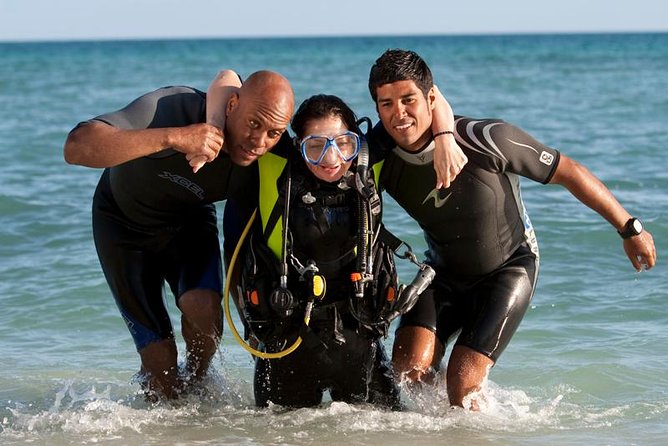
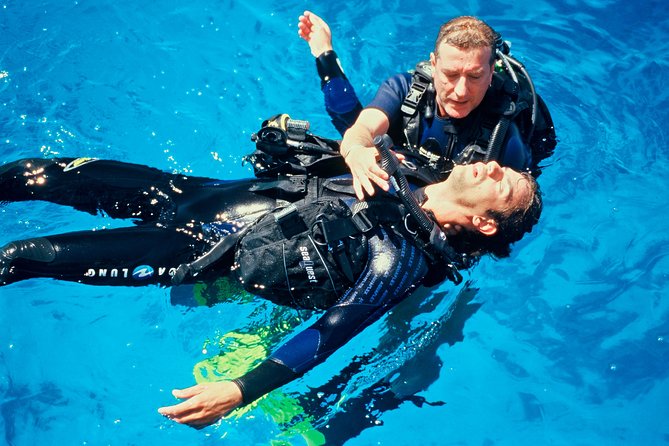
- Self-rescue and unconscious-diver response is taught for both underwater and surface situations
- Day 1 in Amadores bay or a pool, then Day 2 at Amadores Beach for two scenarios
- Insurance and PADI materials plus certification fees included, so your total cost is easier to estimate
Rescue Diver Course in Gran Canaria, why Amadores Beach is a smart classroom
A rescue course is not about looking cool underwater. It is about reducing panic, improving decision-making, and building muscle memory for emergencies. That is exactly what you get with the PADI Rescue Diver Course in Gran Canaria, run by Blue Water.
What makes the location practical is that you are not just learning in theory. You’re training in real coastal conditions around Puerto Rico, with Amadores used for both skill work and later scenarios. The west coast setting also means you can expect consistent diving conditions most of the time, though the exact location for day one (bay or pool) can vary based on conditions.
From the reviews, the standout theme is how professional and calm the instruction feels. People mention clear teaching, a friendly atmosphere, and instructors who take safety seriously without turning the course into a lecture. If you are looking for confidence, that matters as much as the checklist of skills.
More dives and diving courses in Gran Canaria:
- Scuba Diving Experience for Beginners in Gran Canaria
★ 5.0 · 561 reviews - Gran Canaria: Try Scuba Diving for Beginners
★ 4.9 · 403 reviews - Beginners Scuba Diving Experience in Gran Canaria
★ 5.0 · 254 reviews
Price and logistics: what you pay for, and what to plan
The course price is $397.58 per person for about two days. For a certification course, that price makes more sense when you look at what’s included:
- Professional guide
- Hotel pickup and drop-off for selected hotels
- Required PADI materials and certification fees
- Insurance
That inclusion is the big value point. You are not only paying for instruction time, you are also covering the paperwork and core materials you need to complete the course.
What’s not included is food and drinks. So plan on bringing water and snacks for the gaps between sessions, or budgeting for meals near Puerto Rico. This is one of those small travel details that can change your day, especially if you end up waiting between practice sets.
Logistics are straightforward. The start time is 9:00 am. The meeting point listed is the Euronet ATM Manixa at C. Doreste y Molina 18, 35130 Puerto Rico. If your hotel is in the pickup area, you’ll be picked up and dropped back after the activity ends at the meeting point.
Group size is capped at 6 travelers, which usually translates to more coaching per person.
Two days, two learning modes: how the schedule actually flows
This course runs over 2 days and is split into two distinct learning phases.
Day one is about foundations. You will cover rescue-related theory and then practice skills in a controlled setting. Depending on conditions, the skills are shown either in the local bay of Amadores or in an onsite pool. That choice is useful for you as a learner. If conditions are rough, training can shift to a place where you can focus on technique without fighting currents or waves.
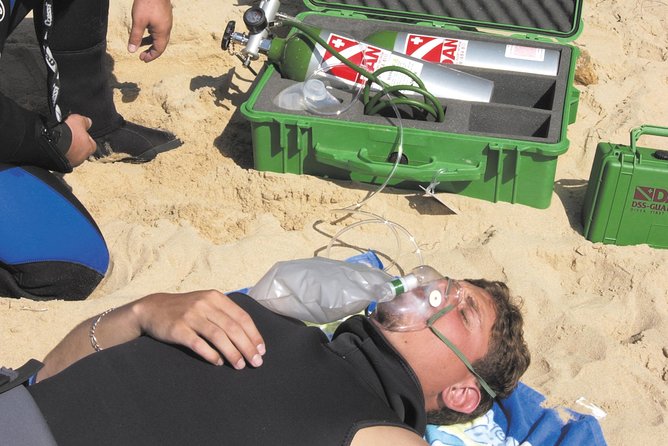
Day two is where it becomes real-world scenario training. You head to Amadores Beach and complete two rescue scenarios. This is when you test how you respond under pressure, because you are no longer only practicing isolated skills. You are reacting in sequence, staying calm, and remembering the steps that keep you and your buddy safe.
If you like structured learning, this course layout is built for that.
Day 1 in the bay or pool: self-rescue basics that build calm
Day one starts with theory and instructor-led skill presentation. The course is designed for divers who already hold PADI Open Water certification, so you are not learning how buoyancy works from scratch. Instead, the goal is to sharpen what to do when something goes wrong.
By the end of day one, you will have learned about:
- Self-rescue techniques
- How to deal with an unresponsive or unconscious diver both underwater and on the surface
If you have ever watched people freeze when a buddy runs into trouble, you know why this matters. Rescue thinking is not something you want to figure out for the first time in an emergency. Day one creates a mental script and then supports it with practice.
Practicing in a pool can feel a little less “adventure,” but it can also be a huge advantage. You can repeat movements until they become automatic. Practicing in the bay of Amadores gives you a more natural feel, with real water context and the kind of conditions you might meet on future trips.
Either way, the value is the same: you learn the response steps and get coaching on technique, not just a checklist to memorize.
One practical tip for you: treat day one like prep day. Get plenty of rest before the 9:00 am start, and be honest with your instructor about what feels confusing. Rescue training moves fast, and clarifying early saves time later.
Same island, a completely different kind of day:
- Gran Canaria: Catamaran Dolphin Watch Cruise with Snorkeling
★ 4.4 · 4,761 reviews - Poema del Mar Skip-the-Line Ticket
★ 4.8 · 3,856 reviews - Puerto de Mogán: Submarine Tour
★ 4.4 · 3,792 reviews - Maspalomas: Guided Camel Ride in the Maspalomas Sand Dunes
★ 4.4 · 3,690 reviews
Day 2 at Amadores Beach: the rescue scenarios that test your timing
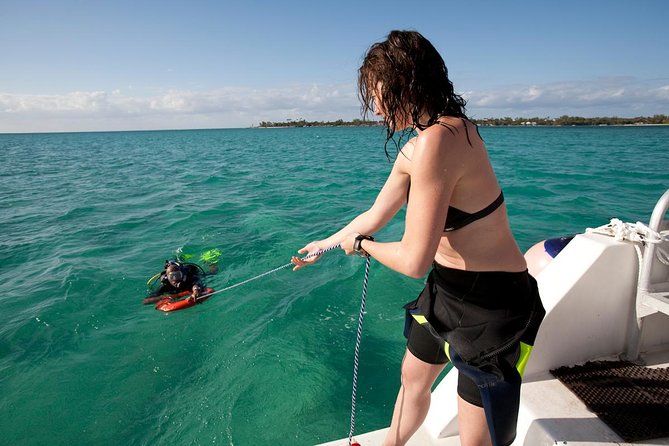
Day two is scenario day. You will head to Amadores Beach and complete two rescue scenarios. This is where the course earns its name.
Even without getting lost in secret details, you can expect the scenarios to focus on exactly what the course description states: responding to an unresponsive or unconscious diver and working through rescue and self-rescue procedures. Because the training includes both underwater and surface response, you are practicing the full chain of events, not just one moment.
For many people, the hardest part of rescue training is not the physical technique. It’s managing your mind. Your heart rate rises, your focus narrows, and you need a plan. Scenario practice is how PADI trains that plan into you.
In the reviews, people repeatedly connect the course quality to the instructor team’s professionalism and friendly support. In real rescue training, that tone helps. When you feel safe and guided, you are more likely to attempt the steps correctly the first time, instead of mentally panicking.
What included insurance and PADI materials mean for your trip planning
When a course includes PADI materials and certification fees, you save the annoying travel problem of counting hidden extras. For you, that’s not glamour, it’s peace of mind.
Insurance inclusion also matters. Emergencies happen. You want to be on a course where the admin basics and safety coverage are already part of the plan.
The course confirmation comes after booking, and you should receive confirmation at the time of booking. You will also need to show evidence of your certification.
Your prerequisites and medical reality check (don’t skip this)
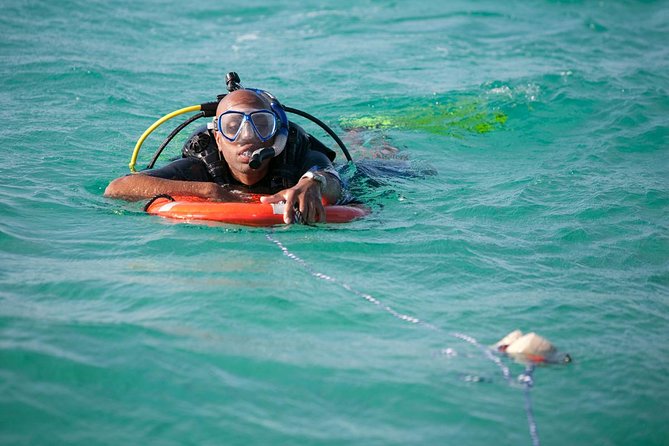
This is a certified course, so you need to bring proof that you already have PADI Open Water certification.
You also need to complete a health questionnaire prior to diving. The guidance says not all medical conditions allow diving. If you have asthma, heart conditions, or similar issues, check with your doctor first. This is not optional busywork. It’s about matching the course demands to your body.
There’s also a travel timing note that you should take seriously: diving within 48 hours of flying is not recommended. If your trip involves a flight before the course, plan your schedule with that in mind.
And while the course is not described as extreme, the instruction requires moderate physical fitness. If you know you struggle with basic endurance or you get breathless easily on land, it’s worth thinking ahead.
Safety tone, small group learning, and what the instructor team is known for
The reviews highlight how professional the teaching feels, and that’s exactly what you want from a rescue course. The course includes instruction and practice for difficult situations, including unconscious-diver response. That means instructors must keep things controlled and clear.
From the feedback, the instructor team includes people such as Chris for instruction and Kate for communication and logistics. People specifically mention Chris doing an amazing job teaching the required skills in a professional yet friendly manner. They also describe Kate as easy and clear when sorting logistics.
The vibe you are aiming for in a course like this is: calm direction, clear corrections, and the feeling that safety comes first. That is what the reviews repeatedly circle back to.
The small group cap of 6 travelers is also a quiet win. In emergency-response training, you need feedback. Small numbers usually mean you get more chances to practice and more help when something does not feel natural yet.
Where you start and how to arrive without stress
Start time is 9:00 am, which means your day works best if you are already in Puerto Rico the night before. The meeting point is at the Euronet ATM Manixa, C. Doreste y Molina 18.
If your hotel is part of the selected pickup list, you will be picked up. If not, you’ll want to plan for the meeting point and know that it’s near public transportation. That detail helps if you want flexibility with where you stay.
Because the course ends back at the meeting point, your return logistics are straightforward.
Who should take this course, and who might rethink it
This course fits you best if:
- You already have PADI Open Water certification
- You want practical skills for real emergencies, not just fun training
- You like learning with strong guidance and clear structure
- You value a course that keeps the group small and the safety tone serious
You might reconsider if:
- You do not have Open Water certification yet (this course is for certified divers)
- You have medical conditions that could affect diving and you have not checked with a doctor
- You are flying shortly before the course, because the guidance says not to dive within 48 hours of flying
- You have limited time for meals, since food and drinks are not included
If you are continuing your education, rescue training can also be a confidence builder for future excursions. But the main goal here is emergency competence.
Practical tips to get the most out of the two days
Here are a few things I’d do to make this course smoother:
- Bring proof of certification. Do not leave this to the morning of.
- Complete the health questionnaire carefully and honestly. If something is unclear, ask before you start.
- Plan your travel so you are not squeezed by flight timing. Aim for breathing room.
- Budget for snacks and water since food and drinks are not included.
- Treat scenario day like the main event, not an add-on. Go into day two rested.
Also, expect the course to feel more intense than a casual swim session. Rescue skills require focus. The good news is that the course format and coaching are built to help you learn under control.
Should you book the PADI Rescue Diver Course in Gran Canaria?
Book it if you are a certified diver who wants real rescue competence, and you like structured training with a friendly, professional team. The biggest reasons to choose this one are the two-day plan, the practice-based scenarios at Amadores, and the value built into the price through materials, certification fees, and insurance.
Skip it for now if you do not meet the certification requirement, or if flight timing and medical considerations make you uncertain. In rescue training, your safety and readiness come first.
If you want one of the best ways to feel prepared for the worst day underwater, this course in Gran Canaria is a strong pick, and Amadores Beach is a fitting place to learn how to respond.
Recently reviewed around Gran Canaria
- Traditional Gran Canaria: Arucas, Firgas and Teror★ 5.0 · 4 reviews
- Water Activities Combo in Gran Canaria★ 4.0 · 5 reviews
- YIN Yoga – deep stretch and relax★ 5.0 · 7 reviews
- Your photo shoot in Gran Canaria★ 5.0 · 4 reviews
- Gran Canaria Historic Tour – Yestarday and Today Premium★ 4.0 · 10 reviews
- Wanderungen im grünen Gran Canaria★ 5.0 · 3 reviews
- E-Bike CitySightseeing: Maspalomas Dunes, Playa Ingles, Meloneras★ 5.0 · 10 reviews
- e-Scooter City Tour + Camel Ride inside Maspalomas Dunes★ 4.5 · 11 reviews
Scuba Diving, compared.
Scuba Diving Experience for Beginners in Gran Canaria
Read our review →
Beginners Scuba Diving Experience in Gran Canaria
Read our review →
Live an Adventure and Learn to Dive with Expert
Read our review →

Browse the lists this tour appears in