
Reviewed · SURF LESSONS
Small-Group Surf Lessons in Gran Canaria
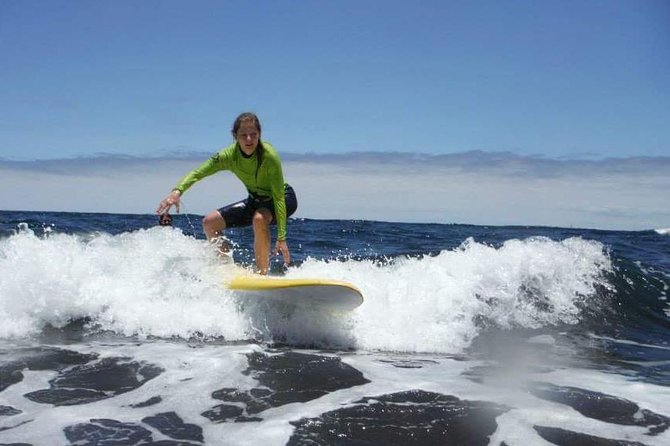
Surfing lessons in Gran Canaria are interesting because the waves here are consistent enough to help you learn fast, even on a short half-day schedule. This class keeps things practical, and it runs with a maximum of 5 people, so you are not stuck watching from the shore while someone else gets all the coaching.
I particularly like the way the session starts with real instruction, then moves you into the water in a structured rhythm. Two things I love: you get hands-on help tailored to your level, and the day ends with free photo downloads so you can actually remember what you did, not just what you hoped would happen.
One consideration: the day is about 4 hours and you will do a fair amount of carrying your board to and from the beach, so it helps if you have moderate physical fitness and no problem with light effort.
Key things to know before you go
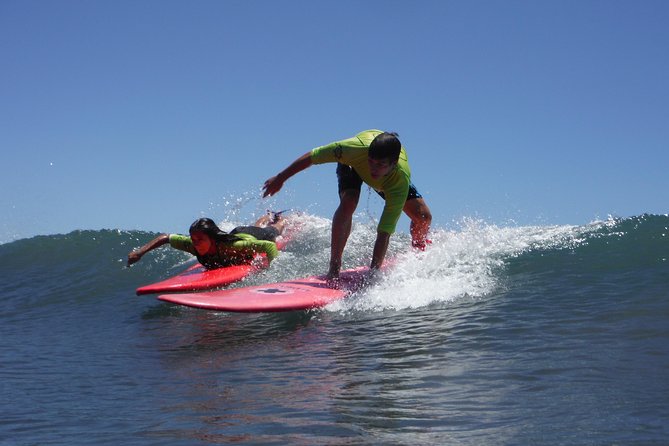
- Max 5-person group means more instructor time and quicker feedback
- Video theory that is not generic, designed to teach the fundamentals that help you stand up
- Two on-the-water sessions, with a planned break to rest and recharge
- All surf gear, snacks, and bottled water included, plus souvenir photos
- English offered, with confirmation at booking time
- Weather-dependent, with a plan if conditions are not suitable
Why Playa del Inglés works well for a first surf lesson
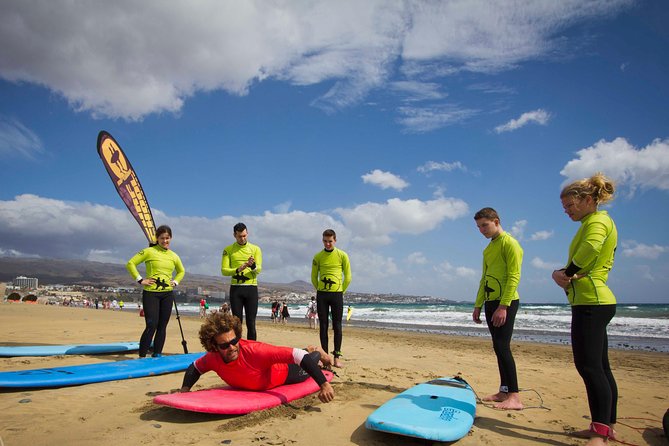
Playa del Inglés, in Maspalomas, is a smart place to take your first surf lessons because it is set up for visitors and activities. You get an easy tourism base, yet you still get to practice where the conditions support learning. In other words, you spend time surfing, not spending your whole morning figuring out logistics.
The lesson you are looking at runs for about 4 hours and is built around progression. You are not just paying for a board and hoping for the best. You get instruction that starts in the classroom, then moves to shore practice, then into two water sessions. That flow matters because surf is one of those sports where the timing, positioning, and small body adjustments make a huge difference.
Also, the coaching style is very “do it, then improve it” rather than “listen and wait.” Instructors like Marta and Dani pop up in the feedback you can expect, and people consistently describe them as patient and encouraging. Another instructor name that comes up is Kasperi, again with a focus on clear guidance and getting everyone onto waves. That is exactly what you want when you are learning something physical and a bit intimidating.
If you are brand new, this setup gives you confidence quickly. If you have surfed before, the same structure still helps because it reinforces the rules that keep you from repeating common mistakes.
More surf lessons in Gran Canaria:
- Playa del Inglés Maspalomas: High Quality Surf Classes
★ 4.9 · 304 reviews - Gran Canaria Maspalomas: Surf lessons all levels
★ 5.0 · 197 reviews - Playa del Inglés surf lessons
★ 4.8 · 121 reviews
Getting there: Surf Canaries meeting point and start time
You will meet at Surf Canaries at Av. Alf Provisionales, Anexo II, Av. 8 de Marzo, Anexo II, Local 1H, 35100 Maspalomas, Las Palmas, Spain. The start time is 9:30 am, though the exact timing can shift depending on daily surf conditions.
This is also described as being near public transportation, which is helpful if you are staying without a car. If you are arriving by taxi or rideshare, just plan to arrive a little early so you can check in without stress.
What to do when you get there is simple: confirm you are checked in, then expect the day to move from a relaxed start into focused teaching. You do not need to overthink it. The day is designed to guide you step by step, and the small group size makes the whole flow feel calm rather than chaotic.
The first hour: briefing, short classroom theory, and video coaching
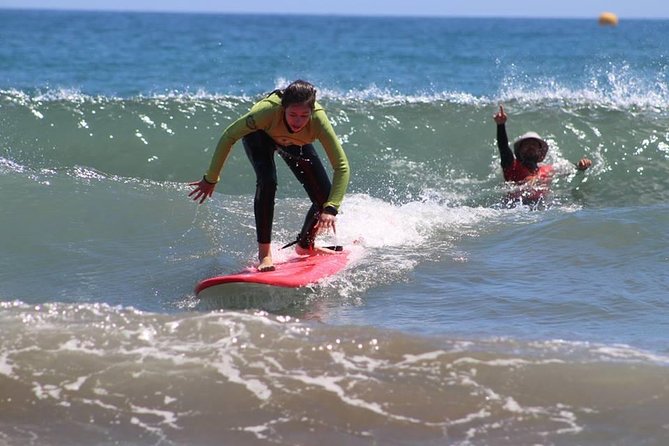
Most days start with a morning briefing at the school around 9:30 am. After that, you get a short theory component in a classroom setting. The big difference here is that the video theory is not presented as generic surfing motivation. It is described as coming from over 10 years of hands-on teaching. That matters, because beginners do not need fancy storytelling. They need specific cues that match what happens in real water.
This part covers the fundamentals that help you get up on the board. Even if you have surfed before, this kind of reinforcement can be useful. You often see the same issues repeat, like stance being off by a few degrees, paddling rhythm being inconsistent, or not understanding the timing of when to pop up.
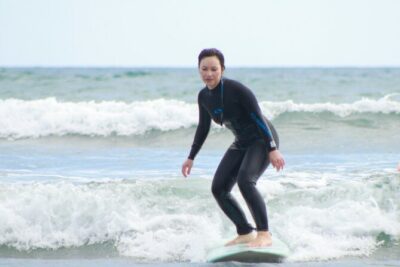
From there, the session moves into a short beach simulation. This is a smart pacing choice. Surfing is easier to learn when you practice the motions on land first, then take those motions straight into the ocean. You also avoid wasting your first minutes in the water trying to remember what someone told you ten minutes earlier.
If you get nervous in water sports, this phase helps you get your bearings fast. You are not thrown directly into waves without context. You get the golden rules, then you practice them in a controlled way.
First surf session: what 50 minutes in the water feels like
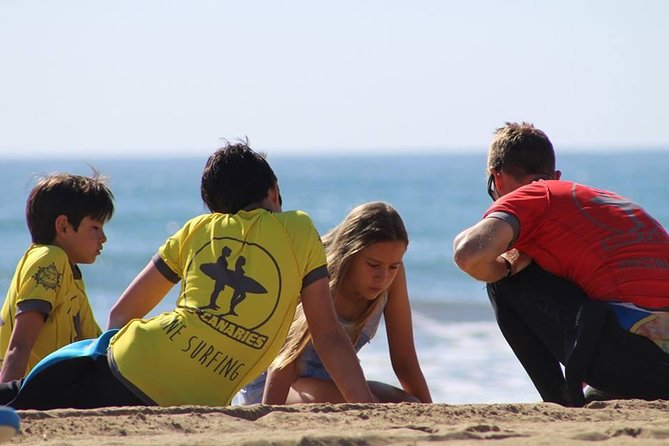
After the theory and beach work, you are ready for your first on-the-water session. The schedule is set so you spend around 50 minutes in the water during that first practice block.
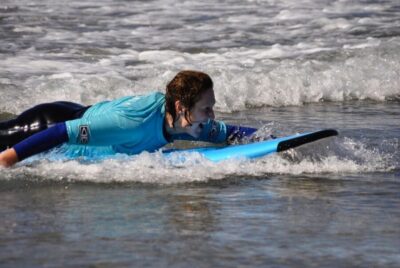
In a group of up to five, this is where you feel the value most. An instructor can watch you closely, correct your stance, and explain what to adjust without you feeling like you are competing for attention. Feedback can be direct, and it is given while you are actually doing the thing, not days later in your memory.
Also, having two sessions rather than one long one makes your learning more realistic. The first block gets you into the movement patterns. Then you get a break before you go again, so the second session is not just survival mode.
One physical detail to be aware of: you will carry your surfboard to the beach. The teaching materials imply it is not far, but it still counts as extra walking and lifting. People mention this as a small fitness add-on, and honestly, for most travelers it is a good trade. It means you arrive at the beach ready, not dragging your day out on a complicated shuttle plan.
More hands-on workshops in Gran Canaria:
- Gran Canaria: Maspalomas Surf Lessons
★ 4.6 · 113 reviews - Gran Canaria Surf Safari Course: Surf Lesson all levels
★ 4.7 · 70 reviews - Gran Canaria: Stand-Up Paddle Lesson & Snorkeling Tour
★ 4.7 · 49 reviews - 2 Hour Stand Up Paddle Lesson in Gran Canaria
★ 5.0 · 39 reviews
The break that keeps the day fun: rest, fruit, and a reset
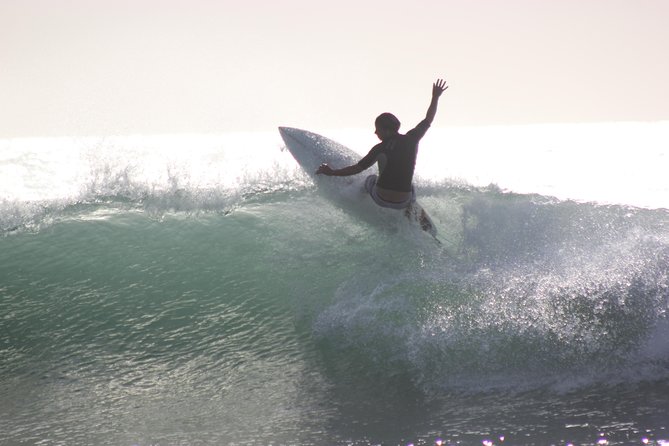
After the first 50 minutes in the water, you get a 20-minute break. The point is recovery. Salt water and wind do a number on your energy, and learning surf is a mental task too. If you push through without a pause, your form breaks down, and then feedback is harder to apply.
During this break, you get complimentary fruit, along with the general snacks and bottled water that are included in the experience. This is not just a nice touch. It helps you keep your head in the game for the second surf session.
If you are traveling with kids or you are just not used to athletic mornings, this kind of pacing can be the difference between a great experience and a miserable one. It also makes the day feel like it was designed by people who teach often, not by people who only care about checkmarks.
Second surf session: applying feedback and building confidence
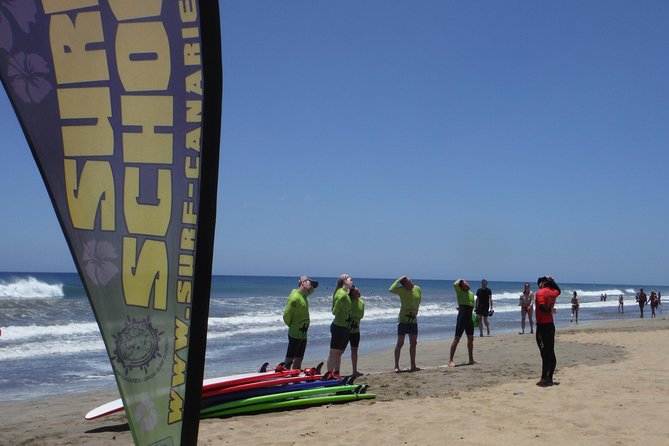
The second on-the-water session comes after the break, when you are rested enough to try again with better control. This is where most people start to feel real progress because you have a chance to apply what you learned during the first session.
Because the group is small, instructors can keep your corrections consistent. You are more likely to hear cues that match your level, whether you are still learning to stand up, or you are refining your takeoff timing.
This is also where the “beginner friendly” part shows up. Your day is structured to help first-timers. But if you have surf experience, the format still gives you something useful, since learning is often about tightening the fundamentals rather than doing wild new tricks.
If you are nervous at first, do not worry too much. The coaching style is described as supportive and patient, and you get repeated chances. Surf learning has a learning curve, and the schedule gives you time to climb it without feeling rushed.
Equipment, snacks, water, and the photo payoff
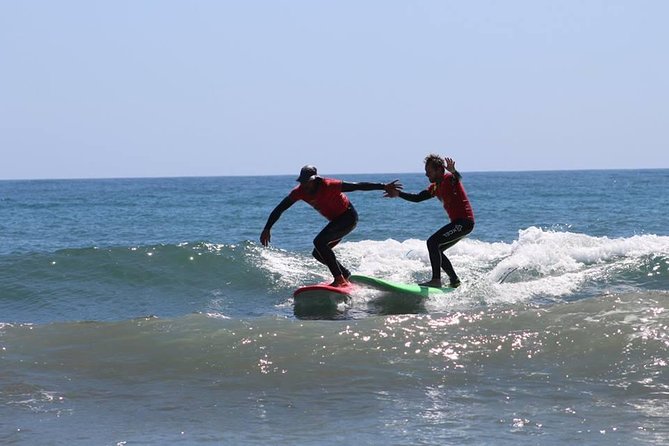
The best part of booking a surf lesson is often what is included, because it removes decision fatigue. Here, you get equipment and boards, snacks, and bottled waters, plus souvenir photos.
Those photos are a big deal, and not in a sales-y way. The process ends with a relaxed photo viewing back at the school, and everyone gets access to the photos afterward. The description is clear: photos are included and free to download, with no upselling or surprises.
That matters because surfing is one of those activities where you forget what your form looked like while it was happening. Video and photos help you connect effort to result. If you are learning, seeing yourself can also show you exactly what stance or timing you need to adjust next time.
Another small practical detail you may appreciate: this experience provides photos even though it is only a half-day. That implies they have a workflow for capturing shots while managing instruction. So you are not left feeling like you paid extra for a service that should have been part of the base.
Price and value: is $72.56 a good deal?
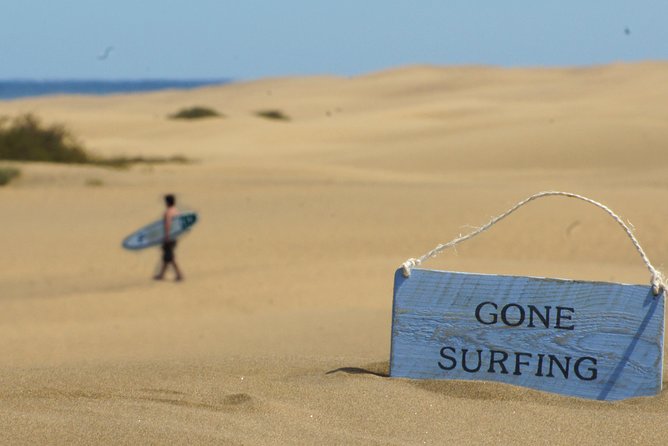
At $72.56 per person for an about 4-hour small-group class, the price feels fair when you break down what you get.
You are not only paying for an instructor’s time. You are also getting:
- surf boards and equipment
- snacks and bottled water
- two water sessions with a planned break
- instruction time that includes theory and beach simulation
- souvenir photos that are free to download
In a small group setting, the instructor time per person goes up. That is a major part of the value. If you have ever done an activity where the group is large, you know you can feel invisible. Here, the maximum of five people makes it much easier to get the kind of corrections that actually change your results.
One more value point: the day is structured since it has been running since 2007, which signals a teaching routine that likely works. You are getting a proven format, not a one-off lesson plan.
If you like to plan ahead, you may also notice this is often booked about 10 days in advance. If you want a specific day, booking earlier is smart, especially during busy vacation periods.
Who this surf lesson is perfect for, and who should think twice
This experience is a great fit if:
- you are a first-timer and want clear steps toward standing up
- you want hands-on support rather than just watching others
- you like small groups with time for individual coaching
- you want the full package, equipment, snacks, and photos, without extra add-ons
It can also suit intermediate surfers who need fundamentals reinforced. The lesson covers the golden rules and uses structured coaching that can tighten up your technique.
Think twice if:
- you struggle with light physical tasks like carrying a board and moving between classroom, beach simulation, and the water
- you get very uncomfortable with ocean conditions and need extra reassurance, because it is still a real surf setting that depends on daily conditions
But for most people with moderate fitness, this is a solid learning experience. The tone coming through with instructors like Marta, Dani, and Kasperi is supportive, patient, and focused on helping you progress at your own level.
FAQ
Where is the lesson meeting point?
You meet at Surf Canaries, Av. Alf Provisionales, Anexo II, Av. 8 de Marzo, Anexo II, Local 1H, 35100 Maspalomas, Las Palmas, Spain.
What time does the surfing lesson start?
The start time is 9:30 am. The exact timing can vary depending on daily surf conditions.
How long is the experience?
It runs for about 4 hours (approx.).
How big is the group?
The class has a maximum of 5 travelers.
Is this lesson suitable for beginners?
Yes. It is ideal for both first-timers and people with surfing experience.
What is included in the price?
Equipment, boards, snacks, bottled water, and souvenir photos are included.
Are photos included, and can I download them?
Yes. The photo viewing is part of the day, and photos are included and free to download, with no upselling.
What happens if weather conditions are poor?
This experience requires good weather. If it is canceled due to poor weather, you will be offered a different date or a full refund.
Should you book this surf lesson?
If you want a surf lesson where you actually get coached, this is an easy yes. The combination of small group size, structured theory plus beach simulation, and two practical water sessions makes it a strong value at $72.56. Add in equipment, snacks, water, and free downloadable photos, and you get a full experience without annoying extras.
Book it if your goal is first waves, confidence, and feedback you can use right away. Skip it only if carrying the board and a moderately active half-day is not for you, or if you know you need a very low-pressure pace.
Recently reviewed around Gran Canaria
- Traditional Gran Canaria: Arucas, Firgas and Teror★ 5.0 · 4 reviews
- Your photo shoot in Gran Canaria★ 5.0 · 4 reviews
- Water Activities Combo in Gran Canaria★ 4.0 · 5 reviews
- YIN Yoga – deep stretch and relax★ 5.0 · 7 reviews
- Gran Canaria Historic Tour – Yestarday and Today Premium★ 4.0 · 10 reviews
- Wanderungen im grünen Gran Canaria★ 5.0 · 3 reviews
- E-Bike CitySightseeing: Maspalomas Dunes, Playa Ingles, Meloneras★ 5.0 · 10 reviews
- e-Scooter City Tour + Camel Ride inside Maspalomas Dunes★ 4.5 · 11 reviews
Surf Lessons, compared.
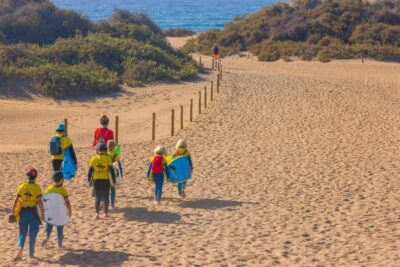
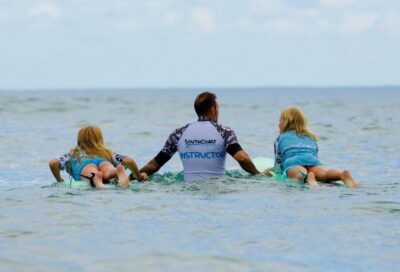
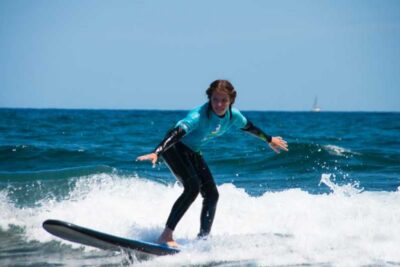
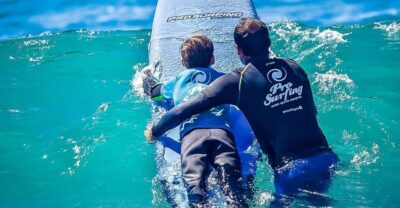
Gran Canaria Surf Safari Course: Surf Lesson all levels
Read our review →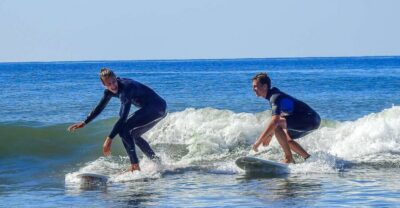
Learn to Surf with a Special Price for Two Group
Read our review →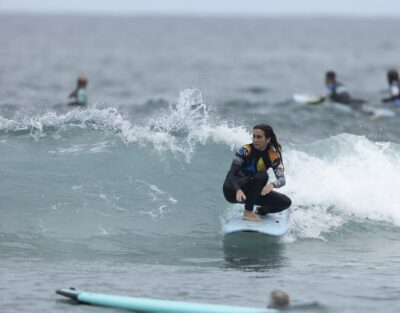
Browse the lists this tour appears in